


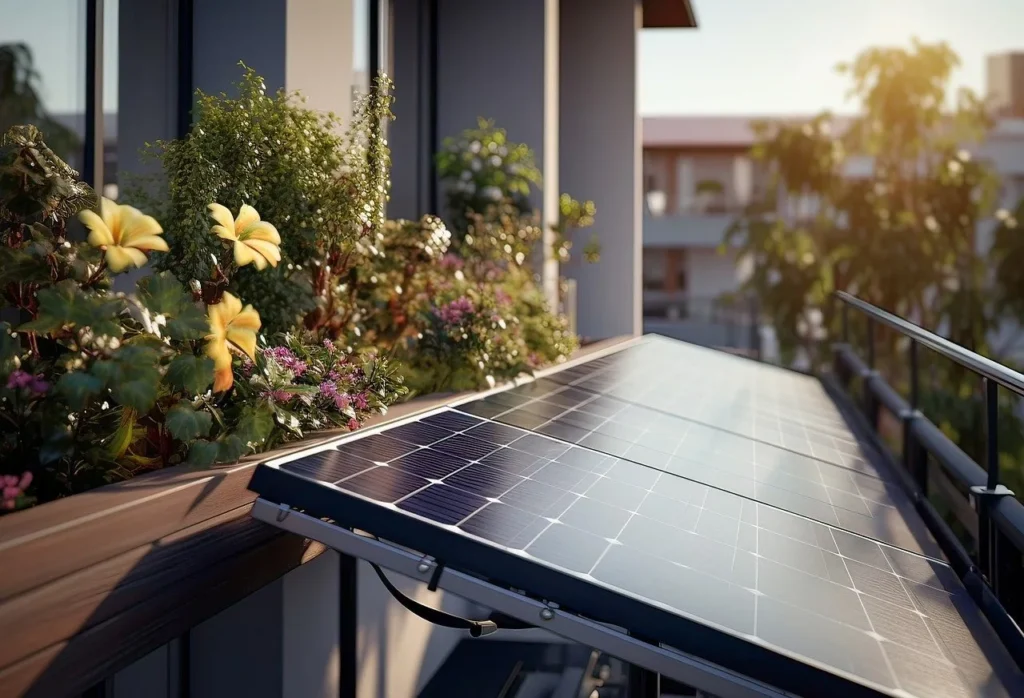
In Zeiten steigender Strompreise steigt auch die Nachfrage nach Lösungen, um diese Kosten möglichst gering zu halten. Dazu gehört zunehmend die Anschaffung einer Photovoltaikanlage zur Installation in Eigenregie. Um langwierige Diskussionen mit Vermieterinnen und Vermietern oder anderen Mitgliedern der Wohnungseigentümergemeinschaft zu verhindern, sieht ein Referentenentwurf des Bundesjustizministeriums nun einen gesetzlichen Anspruch auf die Installation von sogenannten Balkonkraftwerken vor.
Die bisherige Rechtslage sieht für Solarstrom vom Balkon eine gesetzlich vorgeschriebene Einspeise-Limitierung von maximal 600 Watt und teilweise Meldepflichten im Marktstammdatenregister (MaStR) der Bundesnetzagentur sowie beim Verteilnetzbetreiber vor. Einen generellen Anspruch auf den Betrieb eines Balkonkraftwerks haben Eigentümer und Mietende nicht.
In vielen Fällen beantwortet bereits der Mietvertrag die Frage, ob Solarmodule an Fassaden oder Balkonen gestattet sind oder der Zustimmung bedürfen und an welche Voraussetzungen diese geknüpft ist. Dies betrifft etwa die Installation durch einen Fachbetrieb oder einen Tragfähigkeitsnachweis des Balkons. Eine Zustimmung ist ebenfalls vonnöten, wenn für den Betrieb der Anlage eine neue Steckdose gesetzt oder der Stromzähler getauscht werden muss, da in die Elektroinstallation eingegriffen wird.
Ob Vermieter über eine Anlage informiert oder ihre Zustimmung geben müssen, hängt überdies maßgeblich davon ab, wo die Module installiert werden. Vor der Anschaffung sollte unbedingt das Gespräch gesucht und eine schriftliche Genehmigung eingeholt werden. Wird die Anlage an der Balkonbrüstung, an der Außenwand oder auf dem Dach montiert, handelt es sich um eine bauliche Veränderung. Hier ist zweifelsfrei die Zustimmung des Vermieters erforderlich. Im Rahmen der ordnungsgemäßen Verwaltung bestimmt die Wohnungseigentümergemeinschaft in der Eigentümerversammlung, welche Regelungen für die Gemeinschaft gelten sollen. Dabei kann die Eigentümerversammlung zwar nicht darüber entscheiden, ob der Einzelne ein Balkonkraftwerk installieren darf. Dennoch kann die Eigentümerversammlung beispielsweise Regelungen zur einheitlichen Installation oder die verwendbaren Flächen treffen. Ein Einbau ohne vorherigen Beschluss der Gemeinschaft ist rechtswidrig.
In der Rechtsprechung ist zudem umstritten, ob eine Balkon-Photovoltaikanlage eine optische Beeinträchtigung der Fassade darstellt, was wiederum eine bauliche Veränderung darstellt und somit eine Zustimmungspflicht auslöst. Dabei besteht ein Anspruch des Vermieters bzw. einer Eigentümergemeinschaft auf Beseitigung bei mangelnder Zustimmung nur aus triftigem, sachbezogenem Grund. Aspekte wie die Sicherheit der Installation sowie deren Blendwirkung auf Nachbarn sollten in jedem Fall beachtet werden.
Der Referentenentwurf sieht Änderungen des Bürgerlichen Gesetzbuches und des Wohnungseigentumsgesetzes (WEG) vor:
- Im Mietrecht in § 554 Abs. 1 BGB soll die Aufzählung der baulichen Maßnahmen, auf deren Gestattung Mieter einen Anspruch haben, entsprechend ergänzt werden. Die Notwendigkeit, einen Antrag auf Installation beim Vermieter oder der Eigentümerversammlung zu begründen, würde damit entfallen.
- Steckersolargeräte sollen in die Liste der nach § 20 Abs. 2 WEG privilegierten baulichen Veränderungen aufgenommen werden, auf die Wohnungseigentümer einen Anspruch haben.
Weil im Wohnungseigentum trotzdem ein formaler Beschluss der Eigentümerversammlung nötig ist, die oftmals nur einmal im Jahr zusammenkommt, sieht der Gesetzentwurf außerdem eine Beschleunigungsmöglichkeit vor. Künftig soll es demnach möglich sein, Eigentümerversammlungen als reine Online-Veranstaltung abzuhalten. Dafür sollen 75 Prozent der anwesenden Eigentümer auf maximal drei Jahre beschränkt die Durchführung virtueller Versammlungen beschließen können. So soll es leichter möglich werden, kurzfristig eine Versammlung durchzuführen um etwa ein Balkonkraftwerk zu genehmigen.
Die Einzelheiten der geplanten Änderung beobachtet weiterhin Lawyer and notary Simone Krziwanek und steht Ihnen für Rückfragen gerne zur Verfügung.